
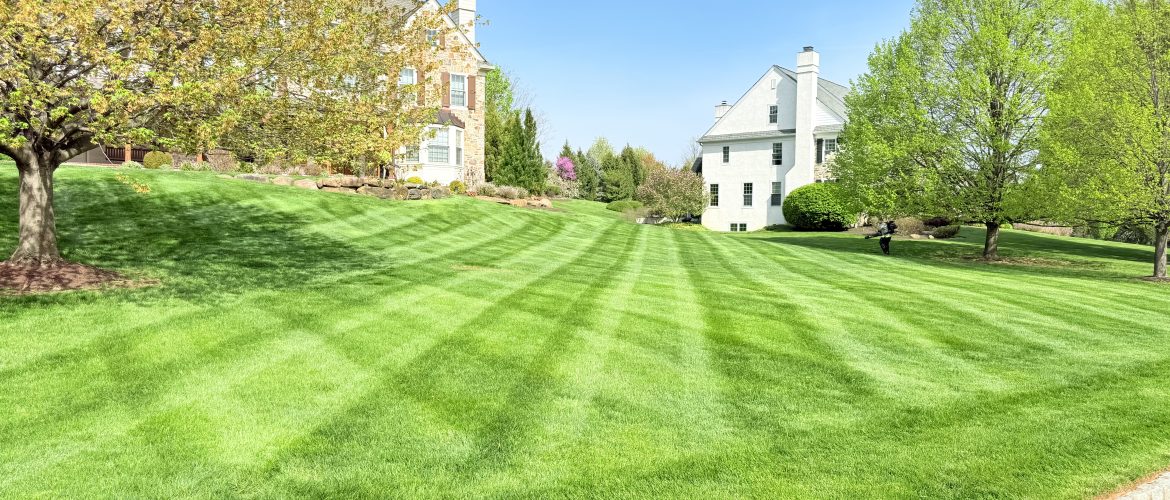
A lush, uniform lawn is more than a visual luxury—it is a reflection of proper soil health, consistent maintenance, and region-specific care. Yet for many homeowners across Delaware County and the Main Line, patchy grass remains one of the most common and frustrating landscaping challenges.
From the historic neighborhoods of Broomall, Havertown, and Springfield to the estate-lined properties of Radnor, Bryn Mawr, and Wayne, lawns face a unique combination of climate stress, soil compaction, and seasonal fluctuations.
This comprehensive guide explains not only how to repair patchy grass—but how to do so correctly, efficiently, and in a way that prevents the problem from returning.
Why Lawns Become Patchy in Delaware County & The Main Line
Understanding the root cause is essential. In areas like Media, Newtown Square, and Media, patchy lawns typically stem from a combination of the following:
1. Soil Compaction
Heavy foot traffic, pets, and clay-heavy soils common throughout Haverford and Marple Township restrict airflow and root development.
2. Improper Watering
Many homeowners in Glen Mills and West Chester either overwater or underwater—both of which stress turf and create thinning.
3. Shade and Tree Competition
Mature trees in Ardmore, Villanova, and Rosemont limit sunlight and compete for nutrients.
4. Seasonal Stress
Cold winters and humid summers across Delaware County create ideal conditions for turf disease and dieback.
5. Poor Soil Nutrients
Without proper fertilization, lawns in Springfield and Broomall often lack the nutrients required for thick, even growth.
Step-by-Step: How to Repair Patchy Grass the Right Way
Step 1: Diagnose the Problem
Before applying seed or fertilizer, identify why the grass is failing.
Is the soil hard? Is there excessive shade? Are there signs of disease?
Homeowners in Wayne and Radnor Township often misdiagnose patchiness and treat symptoms instead of underlying causes—leading to repeated failure.
Step 2: Loosen and Prepare the Soil
Compacted soil must be broken up before reseeding.
- Use a core aerator for larger areas (common in Newtown Square and Broomall)
- Rake out dead grass and debris
- Loosen the top 2–3 inches of soil
This step alone can dramatically improve results.
Step 3: Add Quality Topsoil
In many parts of Delaware County, native soil lacks the organic structure needed for healthy turf.
Apply a thin layer of nutrient-rich topsoil to:
- Improve drainage
- Encourage root growth
- Create a better seedbed
This is especially important in older properties throughout Havertown and Upper Darby.
Step 4: Choose the Right Grass Seed
Not all grass types perform equally in the Main Line climate.
Recommended blends for Bryn Mawr, Villanova, and Media include:
- Tall Fescue (durable, drought-resistant)
- Kentucky Bluegrass (lush, but requires maintenance)
- Perennial Ryegrass (quick germination)
A professional-grade seed mix tailored to Pennsylvania conditions yields significantly better results.
Step 5: Seed and Fertilize Properly
Apply seed evenly across the patch and lightly rake it into the soil.
Follow with a starter fertilizer to promote germination—especially critical in nutrient-deficient areas like Springfield and Clifton Heights.
Timing matters:
- Early fall = best results
- Spring = second best option
Step 6: Water Consistently (But Correctly)
New seed requires consistent moisture—not saturation.
For homeowners in Glen Mills and Aston:
- Water lightly 1–2 times per day during germination
- Reduce frequency as grass establishes
- Avoid puddling or runoff
Step 7: Protect and Maintain
Avoid foot traffic while new grass develops.
Once established:
- Mow at proper height (never cut more than 1/3 of blade)
- Fertilize seasonally
- Aerate annually
This is the difference between a temporary fix and a long-term solution.
When DIY Isn’t Enough
While small patches can often be repaired independently, larger or recurring issues usually indicate deeper problems.
In high-value areas like Radnor, Wayne, and Haverford, many homeowners turn to professional services for:
- Soil testing and correction
- Aeration and overseeding
- Lawn restoration and grading
A professional approach ensures uniform results and long-term lawn health.
Why Patchy Lawns Are So Common in This Region
The combination of:
- Dense suburban soil conditions
- Mature tree coverage
- Seasonal climate swings
…makes Delaware County and the Main Line uniquely challenging for turf management.
What works in other regions often fails here without proper adaptation.
Professional Lawn Repair Services in Delaware County & The Main Line
At Adams Property Maintenance, we specialize in restoring lawns across:
- Broomall
- Havertown
- Springfield
- Media
- Newtown Square
- Glen Mills
- Wallingford
- Radnor
- Wayne
- Bryn Mawr
- Villanova
- Haverford
- Ardmore
Our approach combines soil science, regional expertise, and professional-grade materials to deliver consistent, high-quality results.
Final Thoughts: Fix It Once, Fix It Right
Repairing patchy grass is not simply about spreading seed—it is about addressing soil conditions, selecting the right materials, and following a disciplined process.
For homeowners across Delaware County and the Main Line, success comes down to understanding the local environment and applying proven techniques accordingly.
If your lawn continues to struggle despite your efforts, it may be time to move beyond DIY solutions and invest in a professional, lasting fix.
Ready to Restore Your Lawn?
Visit: https://adamspropertymaintenance.com/
Or contact us today to schedule a consultation and bring your lawn back to life.